
What to Wear in Lapland: How to Dress for Arctic Winter Adventures
I still remember how thrilled and scared I was simultaneously when I first encountered a temperature of -30. At the same time, I saw Finnish people jumping into a frozen river after a sauna, and I thought they were simply out of their minds. Surprisingly enough now, I am super addicted to sauna, ice swimming and cold exposure!
If this is your first time experiencing such a temperature and you share the same feeling, I’m sure you’re not the only one.
Many people think that you must spend a lot of time in Lapland before being able to endure extremely cold temperatures. Well, I don’t agree with this fully. Besides adaptation, the tip is all about wearing the right clothing and being able to read the specific situation.
This is why I created this guide, where I combined all tips from my Lapland guide colleagues as well as my own experience. Yes, I’m from a country where winter barely exists!
No matter how cold it gets, you can always have a magical time in this winter wonderland!
Stay cosy, stay happy.
Dress up for Lapland: The first layer
We have the misconception that big snuggie fluffy coats keep us warm, but it’s the layers underneath that truly keep you toasty. Here’s why:
- Trapping warm air: Layers create pockets of air between them. The air is heated by your body heat and as long as it doesn’t have a way to escape, you will stay warm. You can think of them like cosy blankets!
- Flexibility and adaptability: Layering allows you to adjust to changing temperatures. If you get too hot, you can remove a layer. If you get too cold, you can add one.
- Moisture reduction: Layers can help to wick away moisture, keeping you dry and comfortable.
The amount of “blankets” you need is up to you. But it’s always good to carry a backpack with you so you can easily take off layers when needed or put some back on.
At the same time, you also want to make sure that you are not wearing too many layers, especially if they are too tight. I learned this the hard way. My guide told me that when the layers are too tight, there is no longer space for the warm air in between. Counterproductively, it will make us cold!
So, the next time you’re preparing for a cold day, remember the power of layering!
Tips – the first layer for Lapland activities
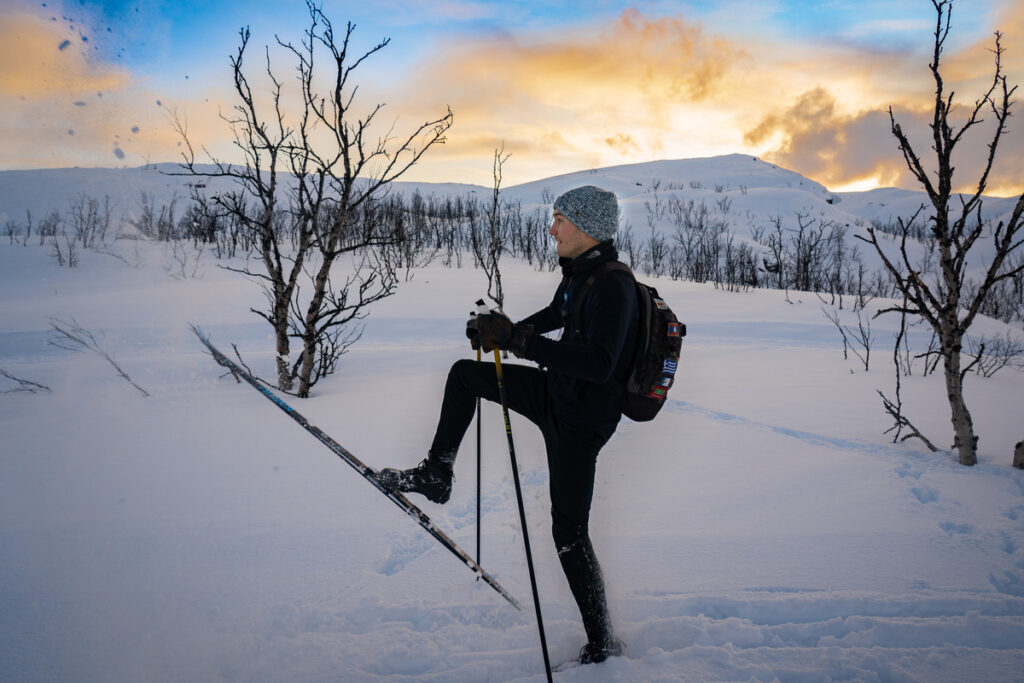
For example, if you’re doing cross-country skiing, snowshoe hiking or any that involves moving a lot, wearing too many layers can make you sweat, which will make you cold later.
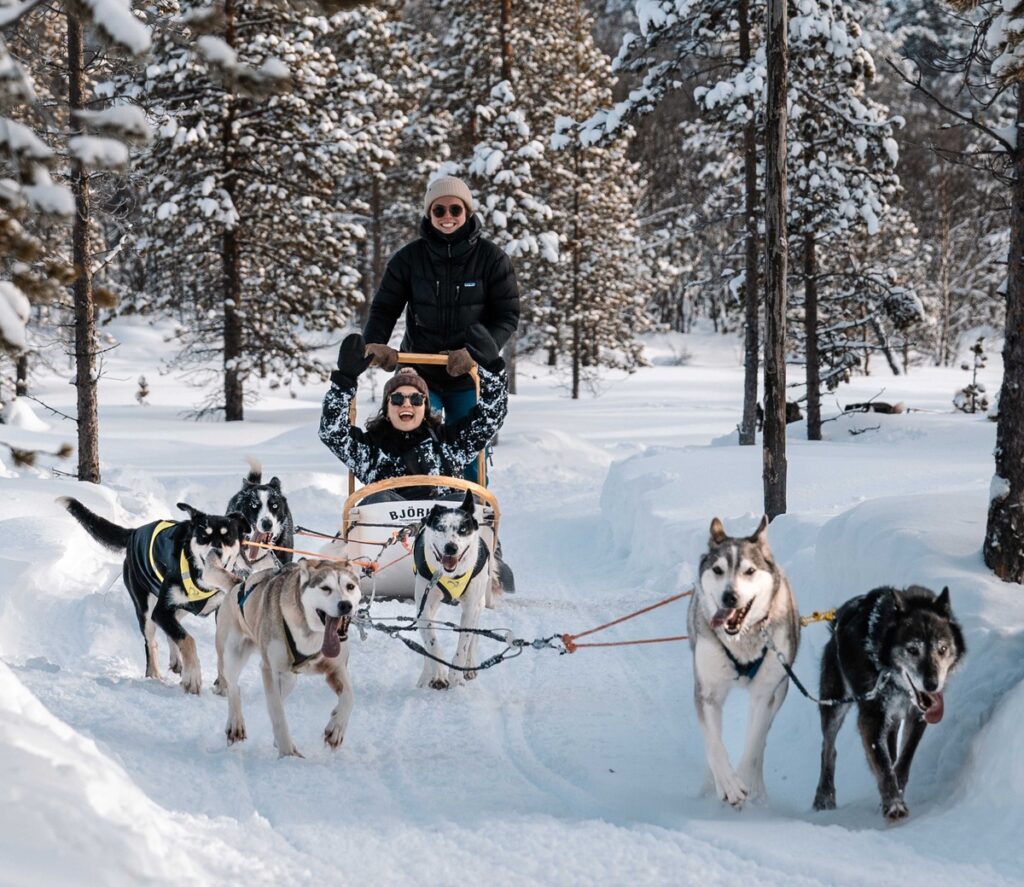
But if you’re on a husky safari where the dogs are doing the running, you’ll want to layer up and protect yourself from the windchill. Protect carefully your face too!
Materials to wear in Lapland
When it comes to layers, materials are very, very, very important!
Here are our suggestions:
1. Wool
Wool is quite spectacular! Even if it gets wet it will still keep you warm. You can imagine a sheep in the cold rain – evolution made sure that the sheep is very well insulated despite the rain. Baa-aaaa!
The best kind would be merino wool, which is known for its excellent insulation, moisture-wicking, and odour resistance.
2. Synthetic materials
Synthetic materials will keep you dry by forwarding the moisture away from the skin onto the next layer and they dry fast. Polyester and polypropylene are popular choices for their durability and quick-drying abilities.
Synthetic thermals are cheaper than woollen ones.
How to be happy in the Nordics: Get some thermals!
Thermals are worth investing in because you can’t rent them, and you will likely use them again if you live in countries with cold winters.
You will find thermal underwear (long-sleeved shirt, long pants/ long johns) in mostly synthetic fabrics or wool, usually merino wool. Woollen thermals are technically better, but either one will do.
Cotton: Yay or Nay?!
Cotton can keep moisture on your skin and take a long time to dry.
That’s why people in Lapland say ‘cotton kills.’ A cotton hoodie can be okay to wear over other clothes, but it’s not a good choice for the layer closest to your skin. This also applies to socks!
Dress up for Lapland: The second layer
The absolute best thing to wear for warmth over your thermal and under your jacket is a woollen sweater. They are excellent at keeping you warm. You can also wear a thicker fleece.
For the times that you are being more active, a 2nd layer might not be necessary or you can use a thinner sweater or fleece. This depends on the weather. We recommend having both options and carrying them in a backpack with you. Even if you might be very sweaty during an activity it’s always good to have something to put on after you are finished or if the weather turns suddenly.
You can also use a 2nd layer of pants under your snow pants or overalls, but this is very much an individual preference. Some people simply get colder than others so you need to experience on your own to know what is a good amount of layers.
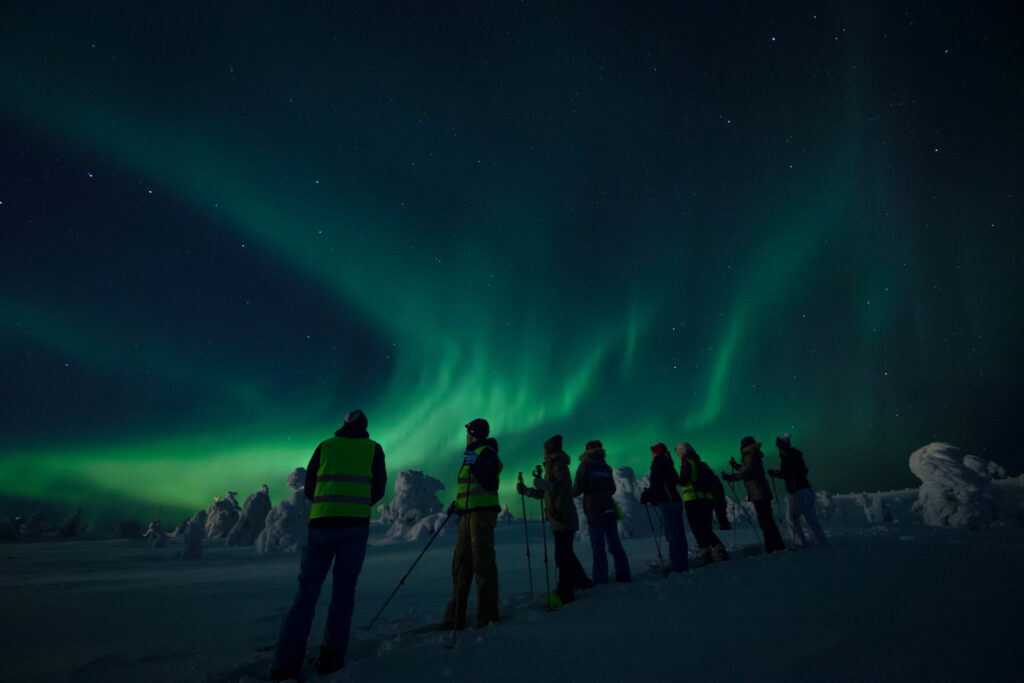
Socks to wear in Lapland
Most of our everyday socks are cotton, so it’s very common for tourists to use them in Lapland too.
This is a big mistake!
Your feet keep sweating even in cold weather, especially when you are going in and out of shops, restaurants or the bus while still wearing your shoes. Once you step out again all that moisture will get cold pretty quickly and in no time your toes are freezing even if you thought you had good boots.
Then, how to keep my feet warm?
As we mentioned, cotton is a big NAY!
The answer to this is to use woollen socks or at the very least a synthetic and wool mix.
You can layer with socks also, but make sure there is still room for air in between.
That’s right, for the same reason, you want to make sure that your shoes are not too small so it does not hug your feet too tight.
Another tip is to make sure your feet are always dry. Whenever you are sitting inside it is a good idea to take off your shoes and air your feet to get rid of any moisture. Don’t worry, in Lapland, it is not considered rude! Just make sure you don’t step into a puddle of melted snow. ☃️
Shoes to wear in Lapland
“Good shoes take you to good places.”
The kind of shoes you wear in Lapland is extremely important.
“Would sneakers be enough?”
Think about it – whenever you are outside you are constantly standing on frozen ground.
So no, sneakers are not sufficient at all.
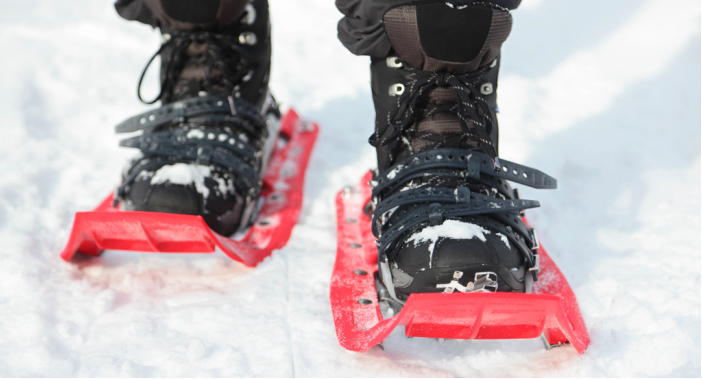
It is important to have insulated and thick enough soles and that the shaft reaches at least above your ankle to stop any snow from getting in. You also want to be able to walk in them comfortably. Beyond that, it doesn’t matter that much.
You can spend a lot of money on winter shoes or you can spend very little.
There are beautiful, expensive leather shoes and you can just as easily get away with a cheap pair of rubber winter boots.
But when you buy or rent your shoes make sure there is enough space for at least one pair of thick socks or two thinner ones. Usually, this is half a size or a full size bigger than your normal size. Shoes that are too small will be cold.
Other accessories
Beanies/Hats
When it’s cold outside, a significant amount of your body heat is lost through your head and feet.
This is why protecting your head from the windchill is so crucial. The best option is to get a beanie thicker by the ears but also cover the top of your head.
Note: A headband or ear muffs are rarely enough. The hood on your jacket is never enough!
Travellers who do not wear hats commonly complain that their feet are frozen. Oddly enough, this is a consequence of not wearing a hat.
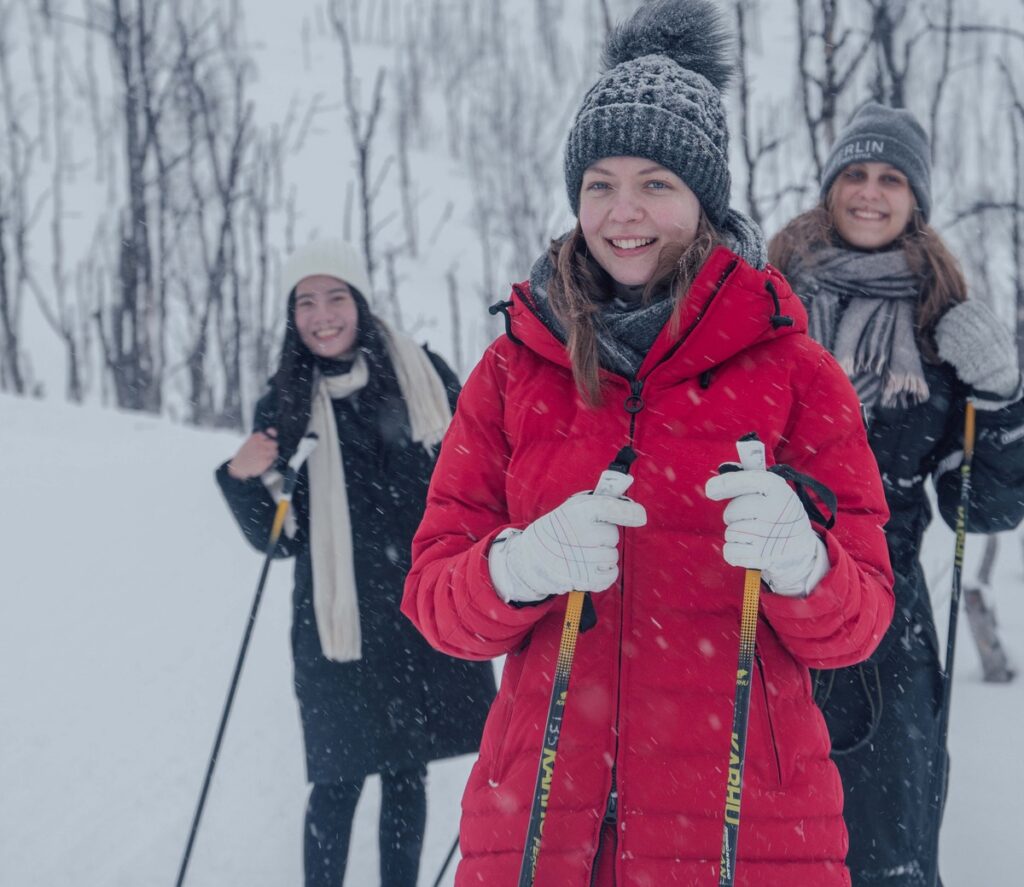
When your head is cold, your body’s natural response is to prioritize keeping your core warm. This can sometimes lead to reduced blood flow to the extremities, including your feet, which can make them feel colder.
So, it’s a good idea to protect your head from the cold to help maintain overall body temperature.
Finger Gloves or Mittens?
Your fingers are often the first part of your body to feel the cold.
Mittens are a great way to keep them extra warm, as they allow your fingers to share heat.
However, if you need more flexibility for tasks like taking photos or adjusting your snowshoes, finger gloves might be a better choice.
Layering with gloves
This again comes down to personal preference, but it’s not a bad idea to layer up with gloves either. For example: finger gloves underneath and mittens on top. This way your hands stay warm even when you take out your phone for photos.
Scarves
A scarf or a buff is great to cover your neck. Even when you are active and need to take off layers it’s advised to keep your neck covered. For activities, any type of buff or neck warmer is the most convenient.
Jackets and snow pants/overalls
Your last layers, jackets and pants, should be weatherproof. This means that they are windproof and at least a little bit water resistant.
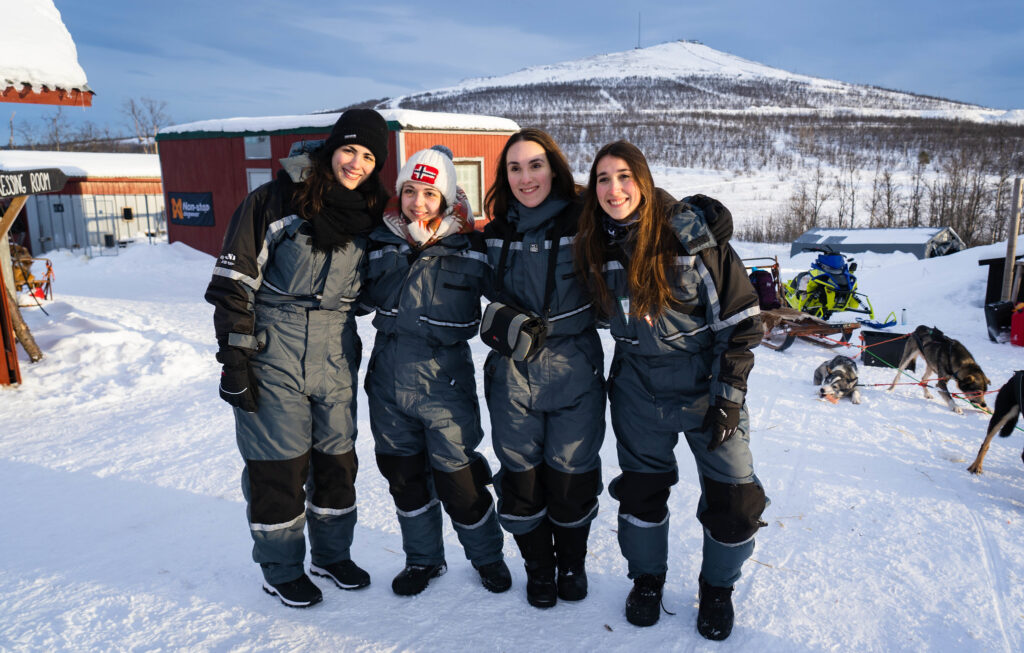
How to choose a Warm Winter Jacket for a Lapland trip:
- Length: A jacket that extends below your behind provides better insulation for your core and protects your back from snow.
- Layers: Make sure your jacket is big enough to comfortably fit 2-3 layers underneath, including a thicker option.
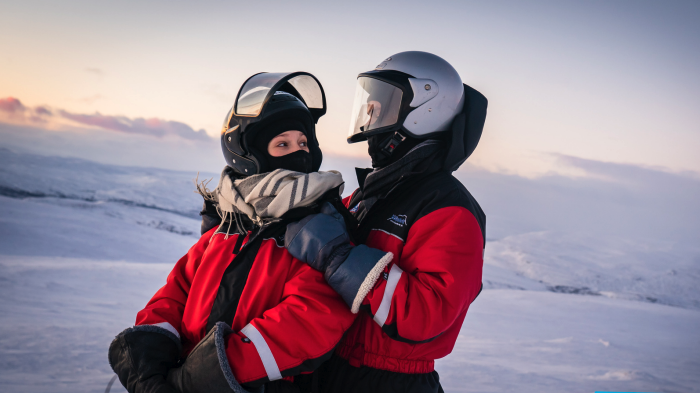
- Overalls: If you’re renting overalls, you won’t need a separate jacket and pants. With overalls, you want to ensure you have the right number of layers underneath and the flexibility to add or remove them as needed.
Where to get them all?
We know that you are a student in an expensive part of the world and winter clothing can be difficult to afford. Not to mention the fact that you might not need the clothes for a very long time if your country does not have cold winters. Below we can suggest how to grab some winter clothing on a budget.
1. Rent clothes in Lapland
The most convenient and cost-effective way is to rent overalls, boots, gloves, and hats at your destination. For Timetravels Lapland trips, we also have options for renting clothes there.
Read more: Can I rent warm clothes in Timetravels Lapland trip? What are the prices?
2. Explore second-hand stores
This is the most sustainable and affordable way to get winter clothing. Second-hand shops often offer high-quality winter clothing at significantly lower prices.
Every Nordic person has a grandmother who loves to knit. The knitted sweaters and socks often find their way to second-hand shops and flea markets and are often of great quality. Likewise, you can find jackets, snow pants, shoes etc. for a good deal. Ask the staff to determine whether or not the sweaters are real wool.
3. Check Out Outlets
Explore outlets for potential deals on high-quality winter clothing from popular brands.
You might find branded jackets, snow pants, and shoes at a great deal!
4. Invest in Quality Brands
If you want to invest in long-lasting winter clothes that are up to date on fashion trends you can go to any sports shop or outdoor gear shop such as Intersport, XXL, Naturkompaniet in Sweden, Partioaitta and Scandinavian Outdoor in Finland etc.)
These shops often carry a wide range of winter gear, from jackets and pants to accessories.
You can also opt for brands known for their durability and style. Haglöfs, Fjällräven, Devold, Patagonia, North Face and Rab have great quality winter clothes. But there are other options, too.
In short…
To stay warm and comfortable in Lapland, just remember these 3 simple key points:
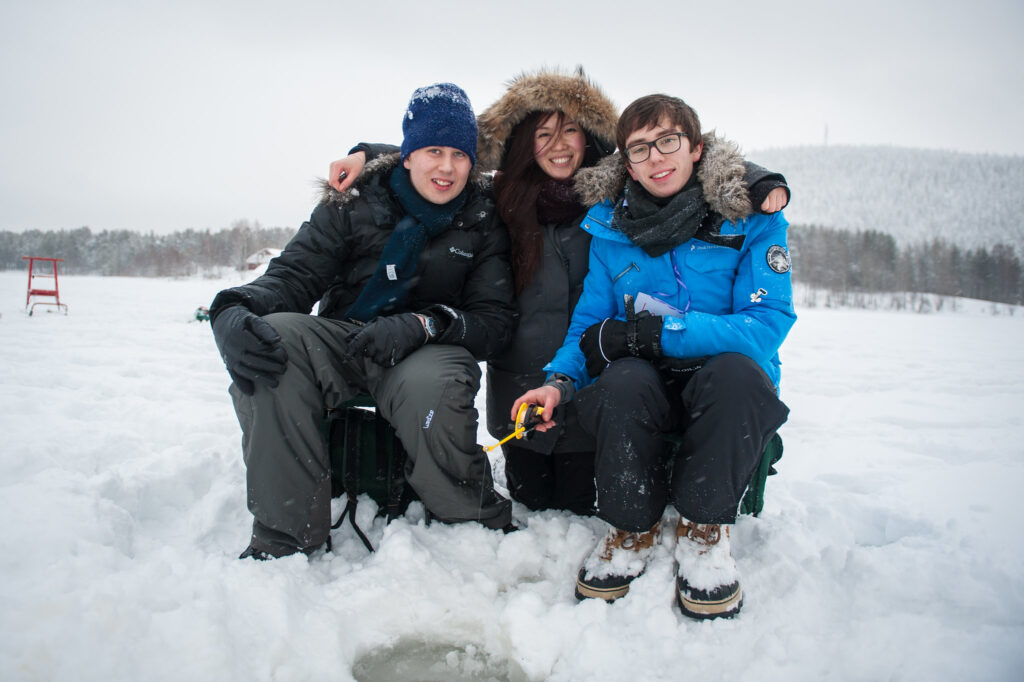
- Layer up: Start with a base layer, add a sweater, and finish with a waterproof jacket.
- Protect your lower body: Wear thermal underwear, snow pants, and waterproof boots.
- Keep your extremities warm: Don’t forget gloves, mittens, and a hat.
Everyone feels the cold differently. So the best thing to do is to understand how you normally react in cold places. Women often feel colder than men due to lower metabolic rates. If you’re someone who feels cold easily, be sure to pack extra layers of warm clothing.
There’s no one-size-fits-all solution, but I hope this guide helps you to get started!
Let’s be ready for a wonderful and comfortable trip to Lapland!
Now what are you waiting for? Plan your next trip to Lapland with us, we’ve got you covered!
Bonus! See how to dress up in ‘live-action’ by our guides here:
Shout out to our co-authors, my lovely colleagues, whom I got these tips from: