
'%20viewBox='0%200%207%2012'%3e%3cg%20fill='none'%20fill-rule='evenodd'%20stroke-linecap='round'%20stroke-linejoin='round'%3e%3cg%20stroke='%23061058'%20stroke-width='1.5'%3e%3cg%3e%3cpath%20d='M25%2021L20%2025.945%2025%2031'%20transform='translate(-19%20-20)%20matrix(1%200%200%20-1%200%2052)'/%3e%3c/g%3e%3c/g%3e%3c/g%3e%3c/svg%3e)


'%20height='12'%20viewBox='0%200%2018%2012'%3e%3cpath%20fill='none'%20fill-rule='evenodd'%20stroke='%23061058'%20stroke-linecap='round'%20stroke-width='1.5'%20d='M6%2011L1.17%206.194c-.094-.094-.094-.245-.001-.339%200%200%200%200%200%200L6%201h0M1%206h16'/%3e%3c/svg%3e)
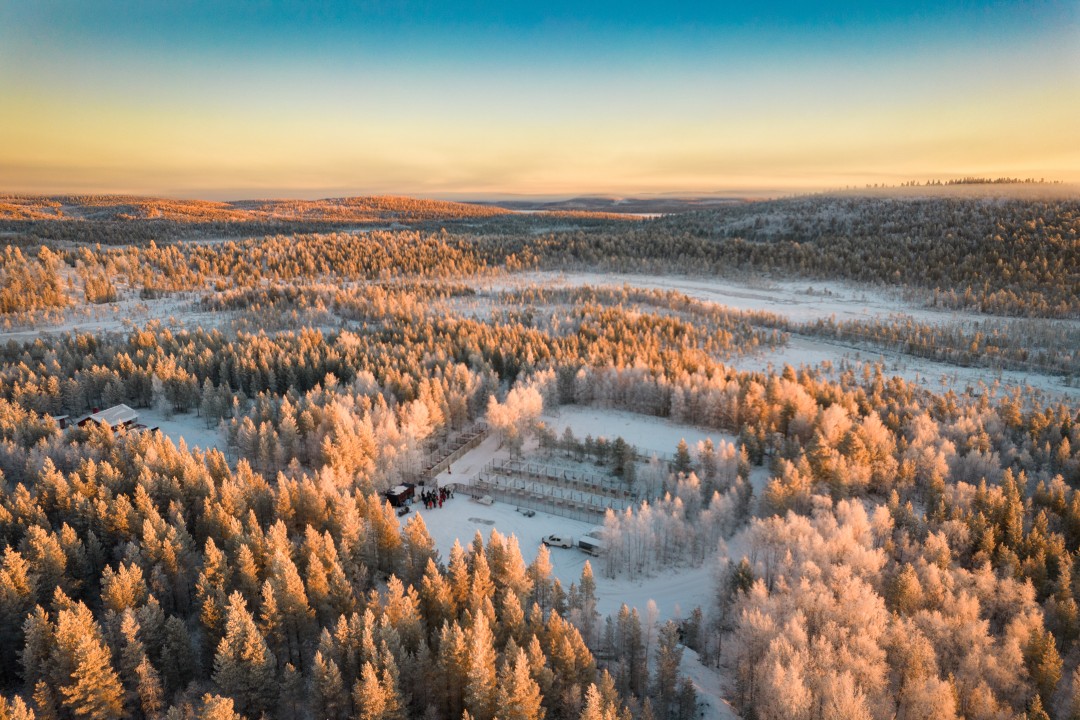
The yard is spacious and designed to optimise dog welfare -> there is electricity, access to fresh water, heated storage/kitchen for the dogs, particular area for sick/injured dogs.
• For dog transportation, we have a customised trailer for 30 dogs.
• We keep a maximum of two dogs per kennel, all with insulated dog houses.
• All dogs are guaranteed to have a clean and dry place to sleep.
• There is a big running fence around the kennel, which makes it possible to release the dogs every day to run around and socialise with other dogs. Free running warms up dogs' muscles and stimulates their senses. The free-running procedure is repeated every day for at least 45 min.
• There’s a kennel map with a description of each dog and their behaviours.
• Dogs' names are written on the kennel walls (except for possible freelancer dogs).
 Dog care & training
 Pregnant dogs & puppies
 Care for retired dogs
 Food
Food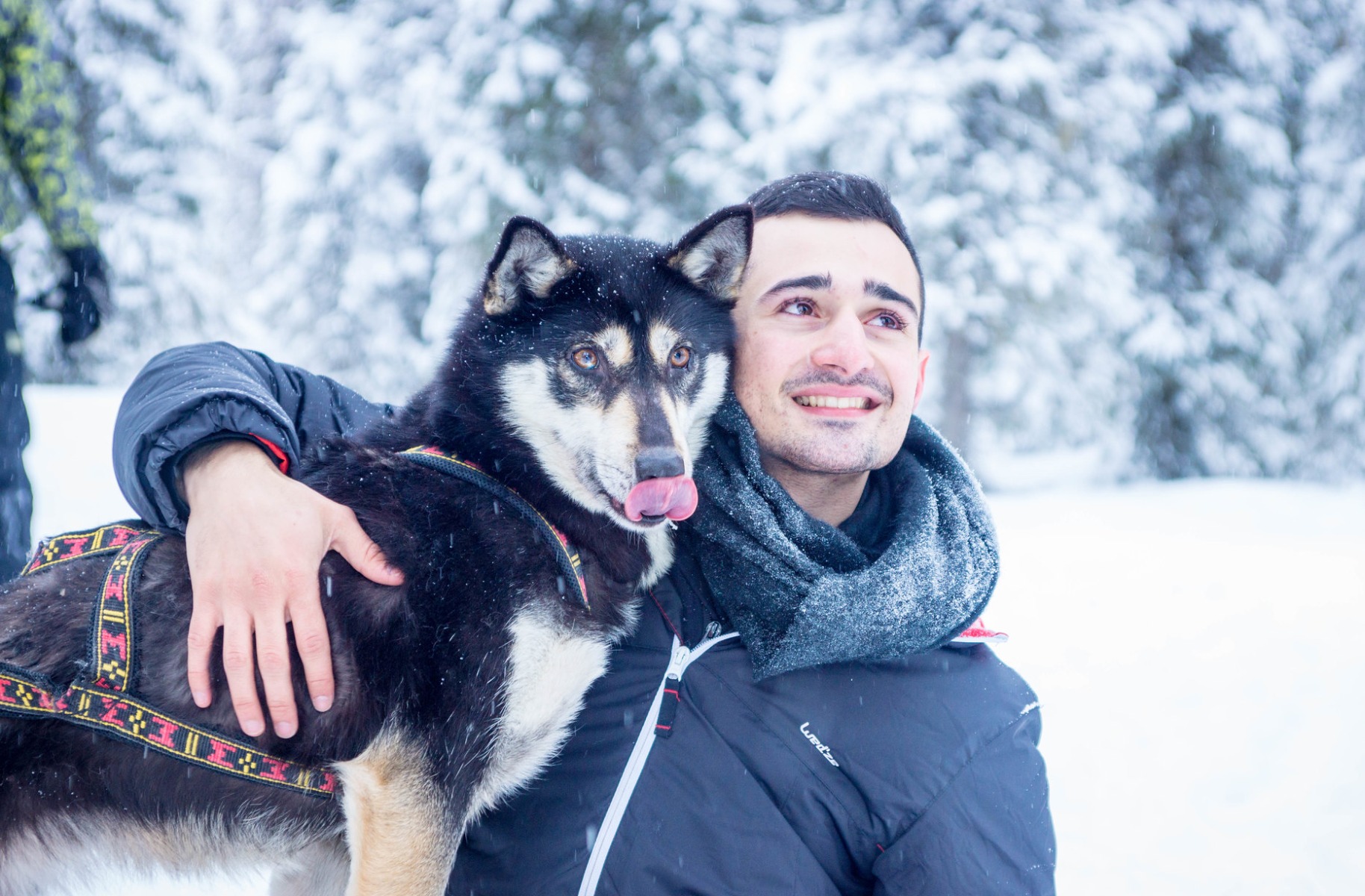
• Taking care of the dogs is 24/7 work. For this reason, there is always one employee staying permanently in the house, which locates next to the husky farm.
• All dogs are checked daily for medical conditions; if anything extraordinary is noticed, the team will contact local veterinaries. This is done every morning when the staff cleans all kennels.
• During the off-season, we have two full-time employees and high-season extra 3-4 seasonal employees or freelancers who take care of the dogs in shifts.
• The kennels and yard is cleaned regularly, and all equipment is kept in neat order.
• All employees have several years of working experience in different kennels with huskies and are passionate about animals and their work.
• All dogs are given necessary and mandatory vaccination and deworming.
• Dogs have a unique training and running plan during all season.
• Training starts in August-September when temperatures start dropping below 5-6 degrees Celsius.
• Training starts with short distances (2-3 km) and is gradually lifted to 20-30 km (by November).
• Training is performed by ATV using forest roads.
• Seasonal employees start their work with dog training in October.
• During training and season, employees help dogs to stretch their muscles; dogs are also organised professional dog massage 1-2 times per season.
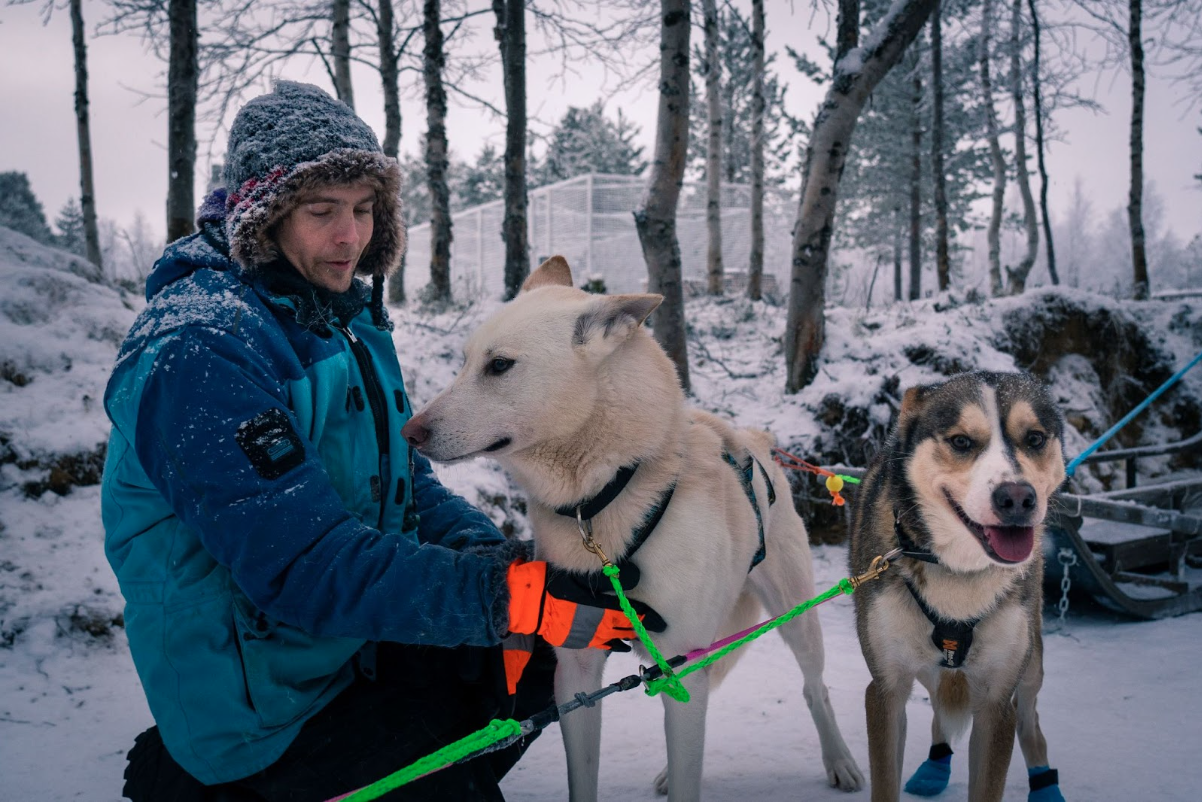
• In addition to all this, our team, of course, spend time with dogs socialising, cuddling, grooming, etc.
• There is a whiteboard in the kennel, which indicates the “heat status” of female dogs. Dogs in heat are kept in separate teams with either female or castrated male dogs to avoid accidental breeding.
• All male dogs, which have no breeding plans, are castrated. This reduces fights and the risk of an accidental litter.
• Dog breeding is done every three years with carefully selected dogs and one litter at a time.
• The pregnant dog is kept inside well in advance before giving birth.
• When puppies grow older, they are brought to the kennel and kept in a separate kennel with a bigger, well-insulated dog house.
• Mothers well-being milk production and well-being are monitored daily.
• Other female dogs can sometimes work as “babysitters” when the mother needs help.
• Puppies get also to see visitors and help to familiarise themselves with people.
• The staff spends a lot of time with puppies, as they need to be paid off special attention regarding feeding, training, socialising and health (vaccinations, deworming).
• Puppies will start their training with forest walks and running with the employees.
• At around seven months, puppies will start careful training in dog teams and continue with 50-85% training/work until becoming 100% pack members by 24 months.
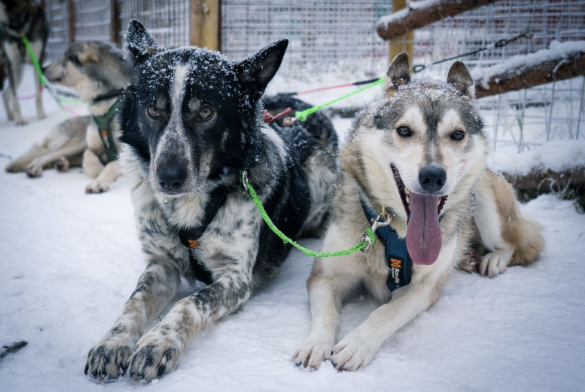
• Once dogs have served their purpose and can no longer run with the teams, we continue taking good care of them and keep them in as healthy and in good condition as possible. For them, it will be essential to stay with the most crucial thing they have - the pack.
• Dogs will participate in training as long as they can.
• Retired dogs will serve as social dogs during kennel tours.
• Adoption of elder dogs is possible if dogs are in good health and we can find good and responsible homes.
• As we are a pretty new kennel, all our dogs are still young; most of the dogs were born in 2018-2020.
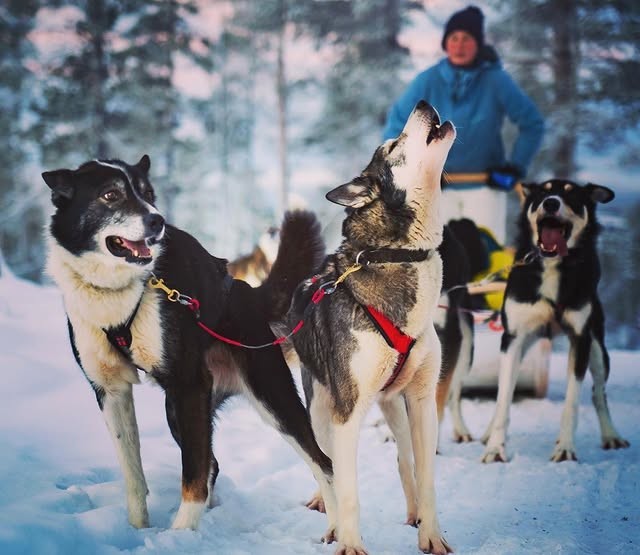
• Dogs are given food according to the season - during tourist season when they consume the most energy.
• We use only the best brands for dog food, with high energy and nutrition concentration designed for racing dogs.
• We mix the dry food with frozen meat; mainly, it’s a mix of beef and pork and has some additional vitamins and nutrients for active dogs.
• We also use frozen meat products from https://mushbarf.de/en/
• Warm soup (hydration) is given to dogs daily, two hours before work. This soup “starts the engine.” for the active day.
• Between safaris, dogs are given “snacks”, which are a mix of different meats (beef, pork, salmon) and water.
• After safaris, dogs are given evening food, a mixture of dry food and meat. After evening food, dogs can relax and be satisfied.
• There is additional “night food” given for dogs that need to gain more weight. This food consists of snacks. If the night is freezing, this late food is given to all the dogs.
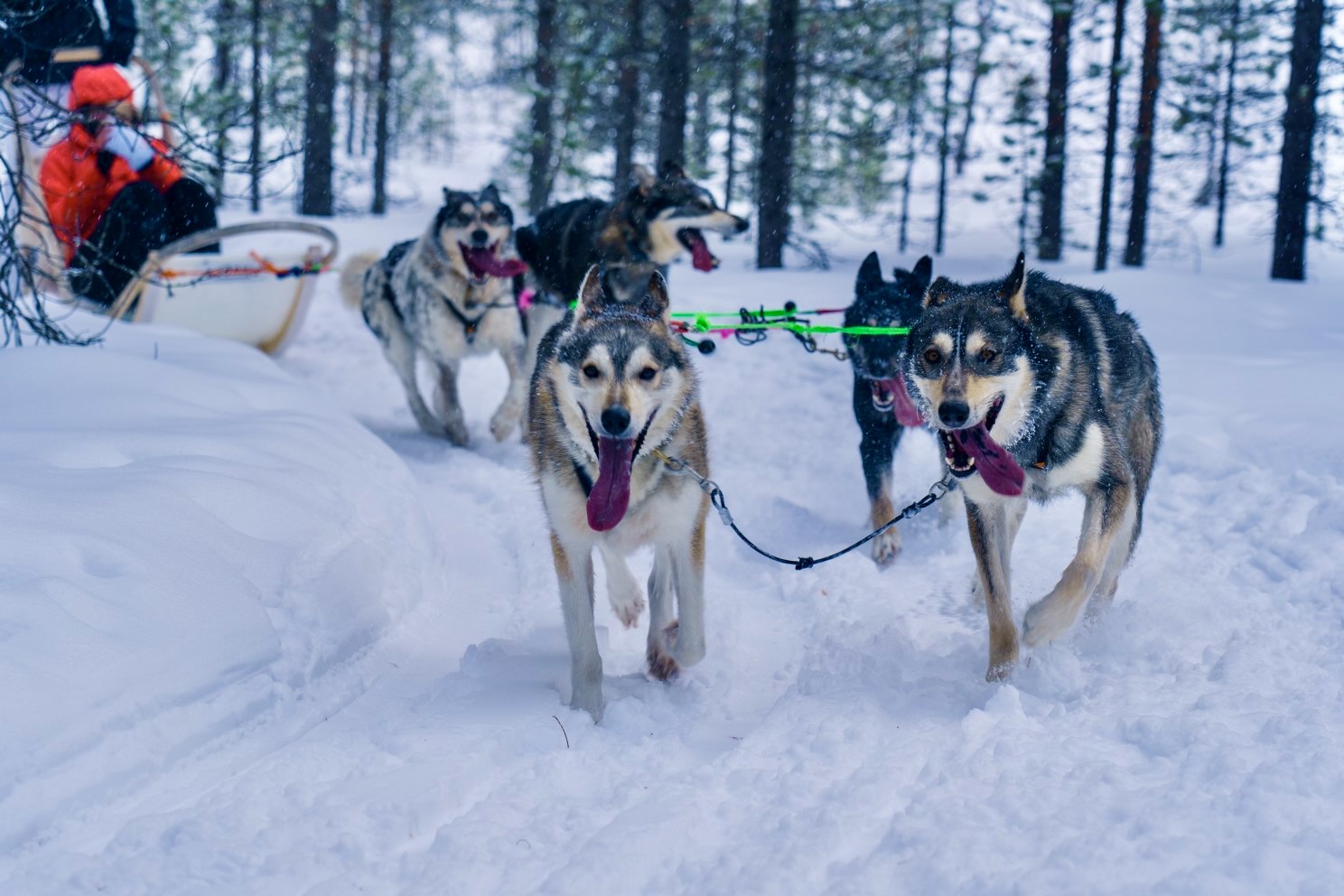
• All safaris are organised with dogs, employees, and customers' safety in mind.
• For smaller groups (max 16 pax) we run 8-10 km safaris.
• For bigger groups (max 50 pax), we run shorter, 3-5 km safaris, either self-driving or with 3-4 person charter sledges.
• Self-driving safaris are organised only if the weather conditions allow it. If the track is too icy, there’s not enough snow etc.; the activity is either changed to a 3-4 km charter safari run by one of our professional guides (customers sit in big sledges) or cancelled.
• Dogs do not overwork - we run a maximum of three program slots per day.
• During peak seasons, we invite professional mushers from Norway to help out with smaller dog teams.
• Dogs are rotating to make sure every dog has enough rest and days off. There is an average of one rest day per week for the entire farm.
• To keep the dogs' motivation high, it is essential to have variation and balance. Route lengths and routes are varied now and then, as well as the positions in dog teams.
• Employees do their best to avoid stressful situations for dogs - the starting area is further down from the kennel, and all guides and customers are instructed to move and act calmly, as the dogs can sense any stress or restlessness.
The first tour to Lapland was organized.
Lapland became the most popular destination and we were inspired to have a Husky Farm.
Not until 9 years later, to meet our high-quality standard, we started searching for a piece of land suitable for happy huskies.
The bid for 72 hectares of land was officially finalized in March 2020.
The Veskoniemi husky farm was opened.
Dream came true: we successfully served happy guests in Veskoniemi.
